





Don’t make EOY classroom cleanup a miserable experience! Try these small organization tips that make a world of difference. Grab a FREEBIE end-of-year checklist too!
If you have ever stood in your classroom in late May staring at a pile of stuff you forgot you even had, I get it. Every single year, I told myself it would be different. Every single year, I was wrong. Until I actually set up some systems during the school year instead of trying to triage the chaos at the end of it.
Here is what I learned after too many miserable end-of-year cleanouts. A little organization throughout the year makes June feel so much more manageable, and honestly, it makes the whole year run smoother, too.
Start With Labels (Seriously, Just Do It)
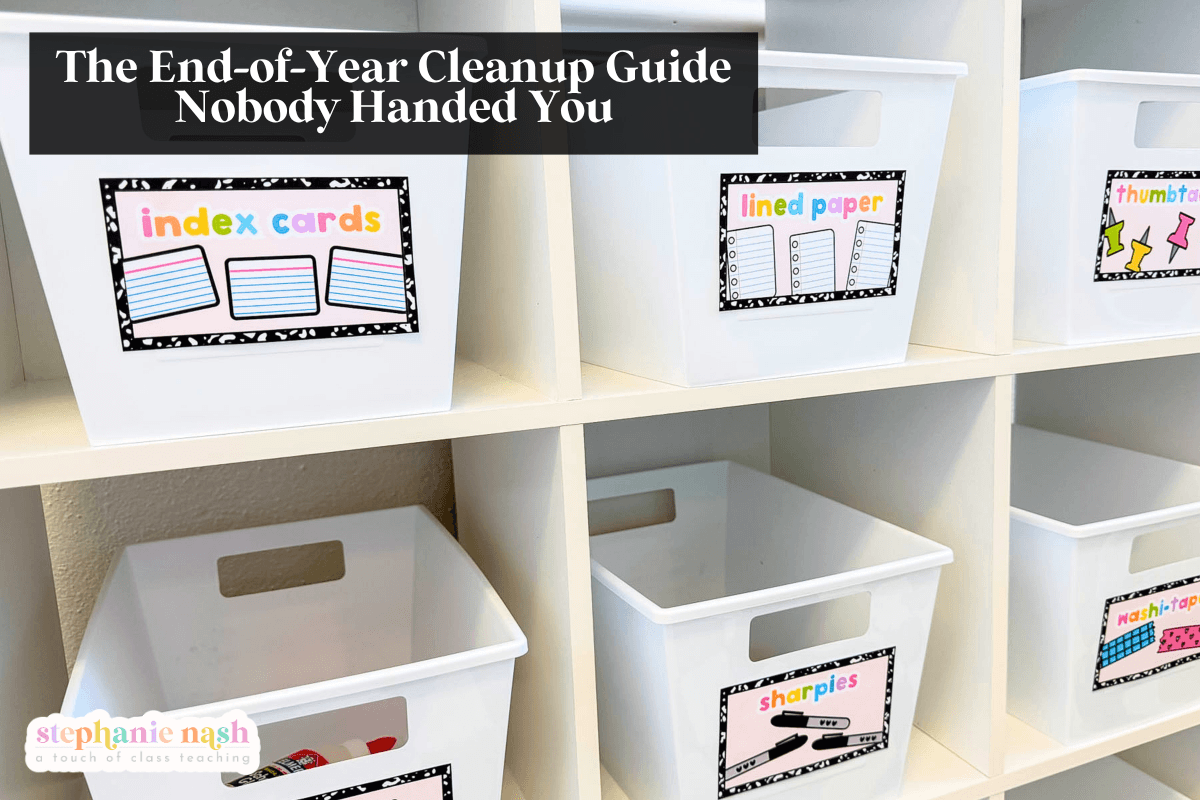
I resisted labeling things for an embarrassingly long time because it felt like extra work. It is actually the opposite. When everything has a labeled home, you stop digging through bins, your students can actually put things away correctly, and at the end of the year, you are not making decisions from scratch about where anything belongs.

Label your supply bins, shelf baskets, cabinet doors, and drawers. Organize and label the spots where student materials live. If there is a container in your classroom, it should have a label. Good storage labels make this look put-together rather than chaotic, and when you pack things up in June, you know exactly what goes where and what actually belongs in your room versus what has mysteriously accumulated over the school year.
Create a System for Paperwork Before It Piles Up
Paper clutter is the number one thing that makes end-of-year cleanup feel impossible. You do not realize how much paper you have touched over nine months until it is all staring at you from every surface.
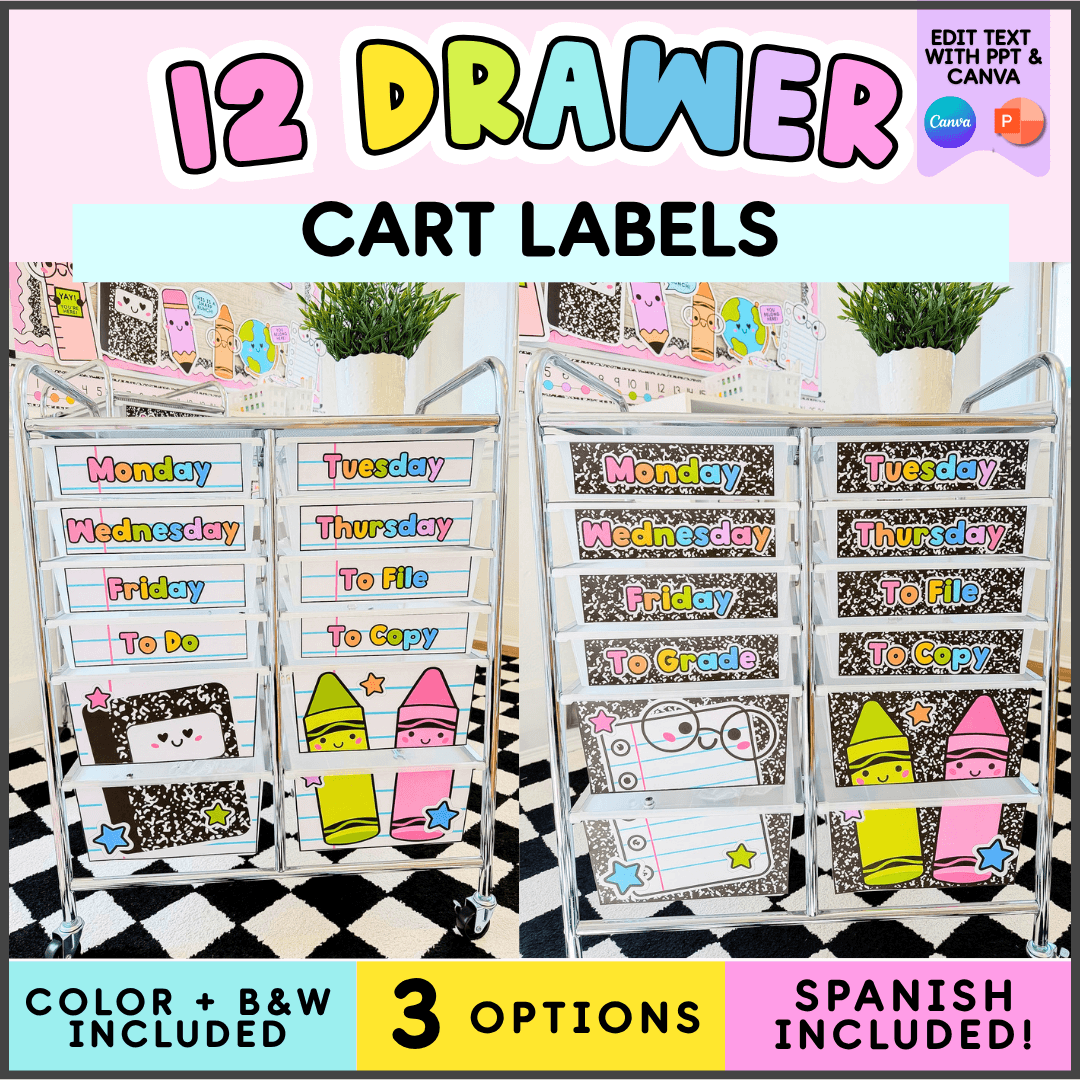
During the year, have a drawer cart for incoming work, a spot for items awaiting grading, a spot for items to be filed or copied, and a spot for items to go home. That is it. Four categories. If paperwork is always moving through those spots, it never builds up into the terrifying mystery stack that you have to sort through in June, wondering what any of it is.
At the end of the year, that mystery stack is what takes hours. Eliminating it during the year saves you so much time.
Keep a Running “Donate or Toss” Bin
This one changed everything for me. I kept a small bin in my closet all year, and anytime I realized something was broken, outdated, or that I had not touched in a year, I threw it in. By May, the decisions were already made. I was not standing there in the middle of cleanup, holding a mystery laminated thing from 2018, trying to figure out if I would ever use it.
When you do your end-of-year cleanup, you want to be packing and purging, not deciding. Do the deciding in small doses throughout the year, and June becomes so much less overwhelming.
Organize Your Supplies by When You Use Them
A lot of classroom clutter comes from having things that only come out once a year shoved in with the things you use daily. If your holiday supplies, your testing materials, and your beginning-of-year stuff are all mixed in with your everyday supplies, everything feels chaotic.
Group things by time of year. Put your back-to-school materials together so you can actually find them in August. Put your seasonal stuff in its own spot so you can grab it when you need it and put it away cleanly when you do not. Having organization for these categories means you are not reinventing your storage system every time you need something seasonal.
At cleanup time, you are just boxing up each category instead of sorting everything from scratch.
Have a Student Belongings System
One of the sneaky contributors to end-of-year chaos is all the student stuff that ends up in your room. Jackets, water bottles, library books, permission slips, mystery items. If there is no clear system for where student belongings go, they end up scattered everywhere, and you end up sorting through things that are not even yours.
A simple lost-and-found spot, clear expectations for where backpacks and personal items belong, and a regular reminder to students to take things home go a long way. Two weeks before school ends, send home a reminder that anything left in the classroom is getting donated or tossed. That deadline alone will reduce what you are dealing with.
Do a 10-Minute Friday Reset
Every Friday before you leave, spend ten minutes putting things back where they belong. Restock supplies that ran low, return things that migrated from their homes, and deal with anything that has been sitting on your desk all week.
It sounds small, but it keeps the room from reaching the point where cleanup feels like a full-day project. You are never more than a week’s worth of drift away from organized, which means the end of the year is not starting from buried.
Make a Packing Checklist Before the Last Week
Every teacher I know waits until the last week of school to figure out what actually needs to be packed up, labeled, stored, or sent to the office. That is the most chaotic possible time to be making those decisions.
Before the last week even starts, make a list. What has to come off the walls? What goes in storage versus stays in your room? Which items do you need to turn in? What are you taking home for the summer? Having a checklist means you are executing a plan instead of figuring one out while also doing a hundred other end-of-year things.

Pair that checklist with a labeled system already in place, and cleanup becomes something you actually finish instead of something you just survive. Grab the FREE Checklist from the vault below!
You do not need a Pinterest-perfect classroom to have good systems. You just need a consistent place for things to live, some labels that make it obvious, and small habits during the year that keep things from building up. Set it up once, maintain it a little as you go, and end-of-year cleanup stops feeling like a disaster.
If you enjoyed this post, you will also love these:
Teachers, Your Teacher Newsletters Are Getting Ignored… Here’s How to Fix That