




As you head into a new school year, consider these first-week-of-school tips that are sure to make your classroom management a breeze. These ideas will make kids feel welcome and seen from day one. Continue reading to learn more, and don’t forget to grab some back-to-school freebies, including labels and posters.

There’s a lot of advice out there about the first week of school. Get to know your students. Go over the rules. Build community. Stay flexible. Be consistent.
And honestly, it’s all true. But after years in the classroom, I’ve learned that the most powerful first-week hack, the one that makes all the difference in how the rest of my year goes, isn’t about how strict you are or how cute your decor looks.
It’s this: Teach routines like you teach content.
Not just once. Not just with a quick explanation. But the same way you teach anything else in your classroom, with modeling, repetition, practice, and review.
Why These First Week of School Tips Work
Most classroom management hiccups during the first week happen not because kids are misbehaving, but because they don’t know what to expect. And if you’ve ever felt like the first week is one long game of “ask me a question I just answered,” you’re not alone.
By treating routines like core content, you remove confusion and give your students a sense of calm and consistency. This creates clarity for them and confidence for you. It’s one of my favorite first-week-of-school tips because it really does lay the foundation for a strong year.
Step 1: Be Clear and Intentional
Before students walk into the classroom, I spend time planning the routines that matter most. That includes entering the classroom, transitioning between subjects, lining up, getting materials, and asking for help. Then, I map out exactly how I want each of these to look. I don’t just hope students will figure it out—I teach them.
To help introduce these routines, I use my First Day of School Slides. These editable slides help me clearly communicate expectations in a way that’s friendly and easy to follow. They also provide structure on our first day, helping students understand what to expect from the start.

Step 2: Practice Like You Mean It
Once expectations are introduced, it’s time to practice. I model the routine first, explaining each step. Then I chose a few students to try it, and we talked through how it went. Finally, the whole class practices together.
For example, if we’re learning how to line up, I model what it looks like to push in your chair, walk quietly, and face forward. Then students practice the routine until it becomes second nature.
We also reflect after each routine practice.
- What went well?
- What could we do differently?
- Why does this routine matter?
It might feel like overkill, but it saves time later. Students who understand your routines are more focused and more confident. And when they get it right, I make sure to notice.
“I love how Jordan walked to the carpet quietly and sat down ready to learn. That helped our class stay calm and focused. Great job.”
Step 3: Keep Expectations Visible
Having your rules and routines displayed gives students something to reference on their own. I always prep my Classroom Rules Display before the first day. I keep it simple, kid-friendly, and aligned with what we’ve practiced together.
The display becomes a natural part of our day. When a student needs a reminder, I refer back to what’s posted.
“Let’s check the board. Rule number three says we respect learning time. That means voices off while someone is speaking.”
Clear expectations and visual cues help support your classroom management setup without needing to repeat yourself all day long. Check out the many different rule poster options in my shop!

Step 4: Prioritize Connection
Even the best classroom systems won’t work without relationships. Building trust and community during the first week is just as important as teaching routines.
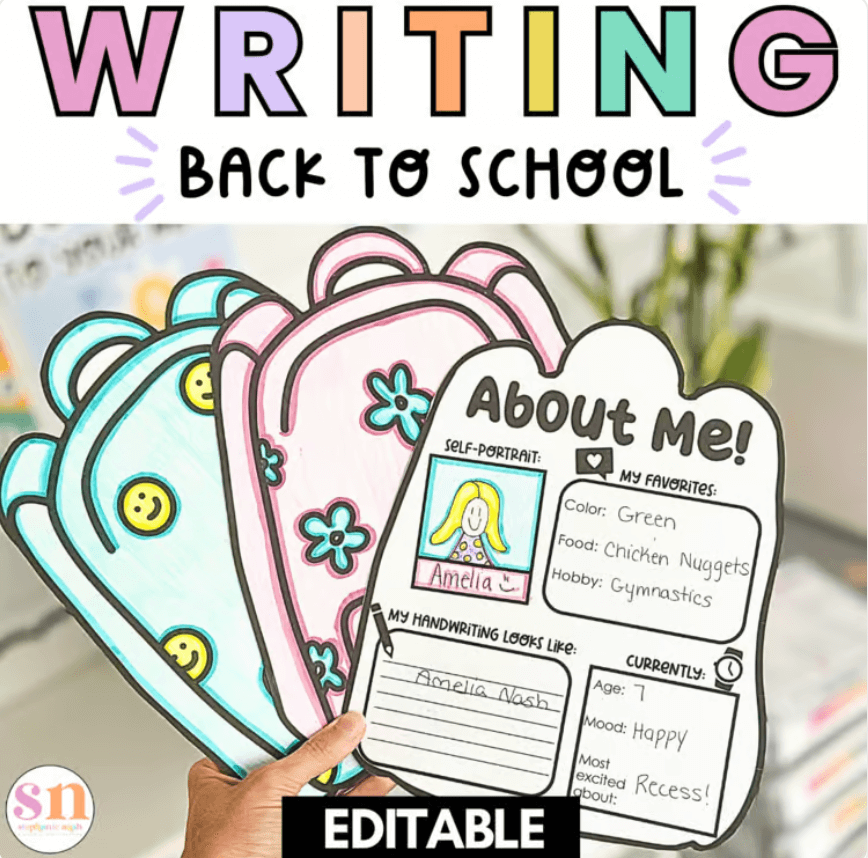
That’s why I love using this Backpack Craft & Writing Activity. It helps me learn more about each student and gives them a chance to express who they are. Prompts include things like:
- What are you excited about this year?
- What helps you feel safe at school?
- What should your teacher know about you?
We use their responses to spark group discussions or partner shares. The backpacks also make an easy bulletin board display that adds personality and student voice to the room right away.
Step 5: Repeat and Reinforce
One of my best first week of school tips is to revisit routines every single day during that first week. Kids won’t remember everything from day one, and that’s okay. Think of it like spiraling back through your classroom culture.
Keep practicing. Continue reflecting. Keep pointing out the behaviors you want to see. This consistency helps students internalize the expectations, allowing you to focus on teaching instead of redirecting.
Frequently Asked Questions
Start with the routines that most impact your classroom flow, like entering the room, transitioning between activities, asking for help, and lining up. Once those are solid, you can introduce others as needed. The key is to model, practice, and reinforce them regularly.
Consistency and visual reminders go a long way. Display your classroom rules and routines where students can easily see them, and revisit them daily during the first week. Praise students for following expectations to help those behaviors stick.
Use activities that help students share about themselves, like the All About Me Backpack Craft. Group discussions, partner shares, and positive reinforcement also help students feel valued and connected right from the start.
The Takeaway
There’s no one-size-fits-all plan for classroom management. But if you focus on teaching routines like content, making expectations clear, and building strong relationships from day one, you will create a classroom that runs smoothly all year long.
To make your first week easier, I recommend these three ready-to-use resources!
Start strong. Stay consistent. And enjoy the year ahead knowing your classroom has a strong foundation from day one.
If you enjoyed these first week of school tips, you will love these too:
Classroom Decor Labels That are Bright, Organized, and Ready to Print
I Was Struggling with Open House Prep Until This ONE Thing Changed Everything!
I Am a Teacher and This Is My Favorite Hack for First-Week Classroom Management